

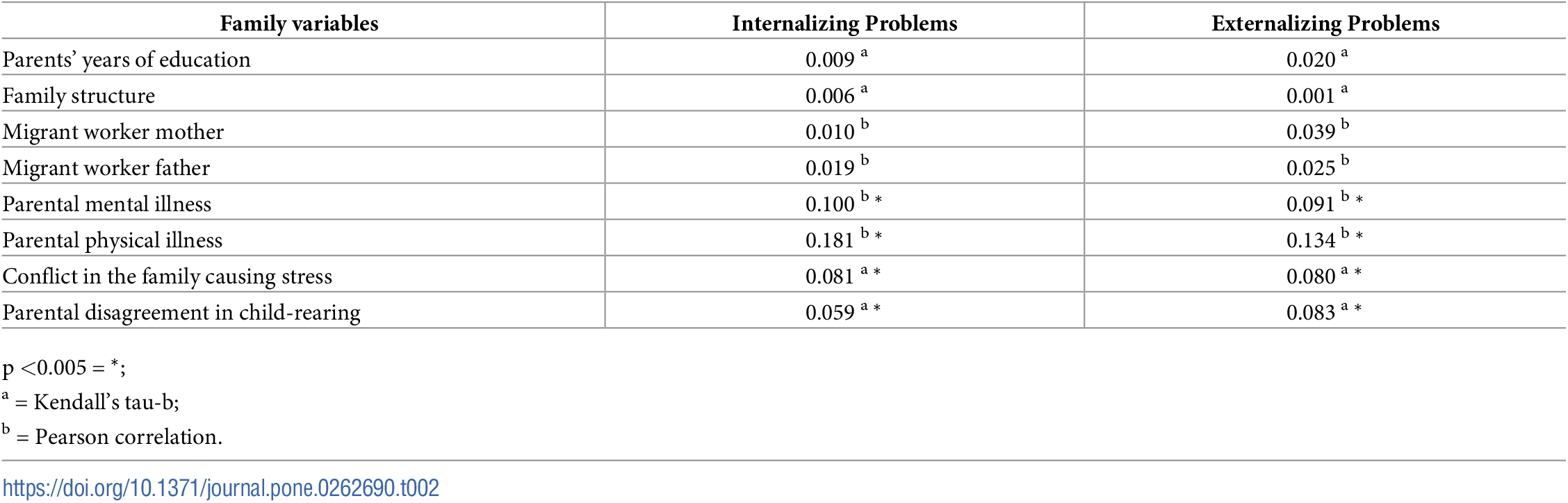
Jasmine MaID1,2*, Pashupati Mahat 3, Per Håkan Brøndbo4, Bjørn H. Handegård1, Siv Kvernmo5 , Anne Cecilie Javo1,6 1 Regional Centre for Child and Youth Mental Health and Child Welfare -North, Faculty of Health Sciences,UiT The Arctic University of Norway, Tromsø, Norway, 2 Child & Adolescent Psychiatry Clinic, Kanti Children’s Hospital, Kathmandu, Nepal, 3 Centre for Mental Health and Counseling, Kathmandu, Nepal, 4 Department of Psychology, Faculty of Health Sciences, UiT The Arctic University of Norway, Tromsø, Norway, 5 Department of Clinical Medicine, Faculty of Health Sciences, UiT The Arctic University of Norway, Tromsø, Norway, 6 Sami National Competence Center for Mental Health, Sami Klinihkka, Finnmark Hospital Trust, Karasjok, Norway
Read More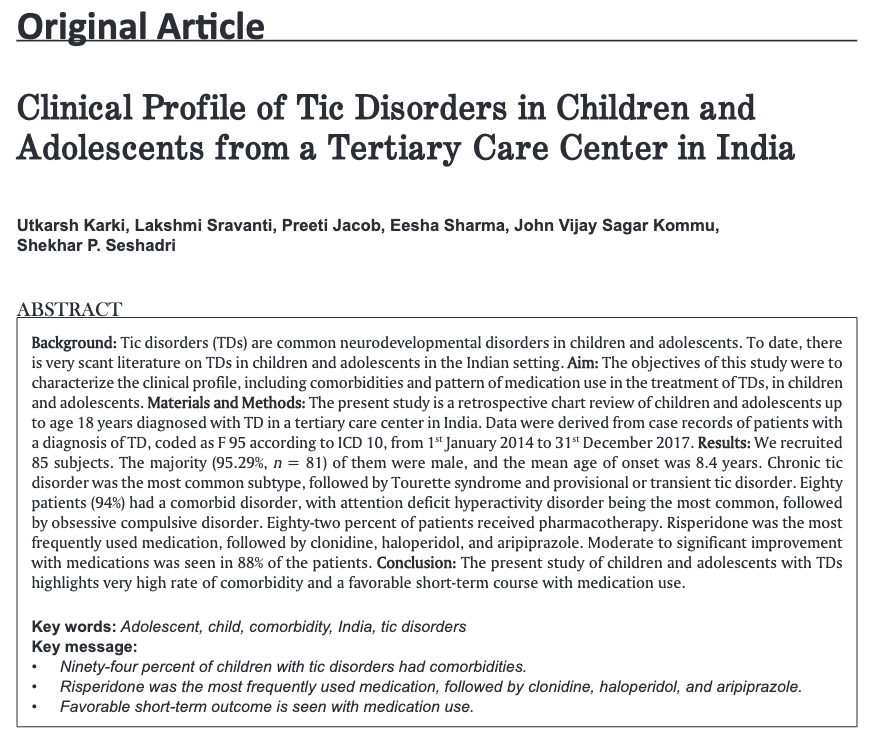
ABSTRACT Background: Tic disorders (TDs) are common neurodevelopmental disorders in children and adolescents. To date, there is very scant literature on TDs in children and adolescents in the Indian setting. Aim: The objectives of this study were to characterize the clinical profile, including comorbidities and patterns of medication use in the treatment of TDs, in children and adolescents. Materials and Methods: The present study is a retrospective chart review of children and adolescents up to age 18 years diagnosed with TD in a tertiary care center in India. Data were derived from case records of patients with a diagnosis of TD, coded as F 95 according to ICD 10, from 1st January 2014 to 31st December 2017. Results: We recruited 85 subjects. The majority (95.29%, n = 81) of them were male, and the mean age of onset was 8.4 years. Chronic tic disorder was the most common subtype, followed by Tourette syndrome and provisional or transient tic disorder. Eighty patients (94%) had a comorbid disorder, with attention deficit hyperactivity disorder being the most common, followed by obsessive-compulsive disorder. Eighty-two percent of patients received pharmacotherapy. Risperidone was the most frequently used medication, followed by clonidine, haloperidol, and aripiprazole. Moderate to significant improvement with medications was seen in 88% of the patients. Conclusion: The present study of children and adolescents with TDs highlights a very high rate of comorbidity and a favorable short-term course with medication use. Keywords: Adolescent, child, comorbidity, India, tic disorders Key message: • Ninety‑four percent of children with tic disorders had comorbidities. • Risperidone was the most frequently used medication, followed by clonidine, haloperidol, and aripiprazole. • Favorable short‑term outcome is seen with medication use
Download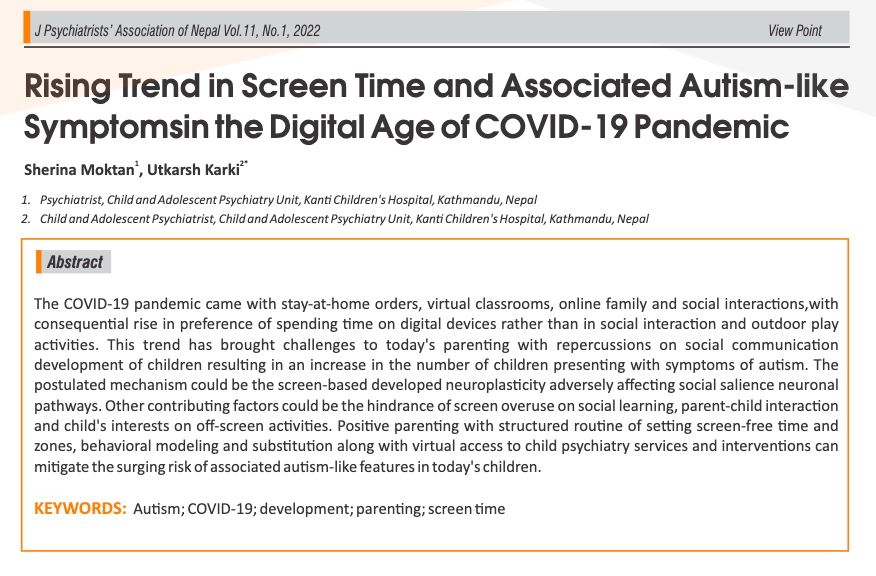
The COVID-19 pandemic came with stay-at-home orders, virtual classrooms, online family and social interactions, with consequential rise in preference of spending time on digital devices rather than in social interaction and outdoor play activities. This trend has brought challenges to today's parenting with repercussions on social communication development of children resulting in an increase in the number of children presenting with symptoms of autism. The postulated mechanism could be the screen-based developed neuroplasticity adversely affecting social salience neuronal pathways. Other contributing factors could be the hindrance of screen overuse on social learning, parent-child interaction and child's interests on off-screen activities. Positive parenting with structured routine of setting screen-free time and zones, behavioral modeling and substitution along with virtual access to child psychiatry services and interventions can mitigate the surging risk of associated autism-like features in today's children. KEYWORDS: Autism; COVID-19; development: parenting: screen time
Download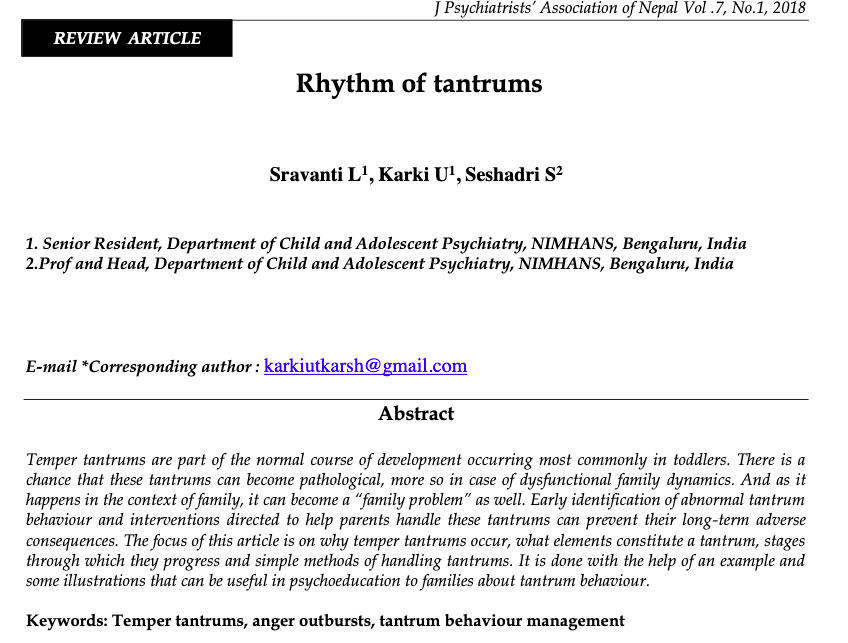
Abstract Temper tantrums are part of the normal course of development occurring most commonly in toddlers. There is a chance that these tantrums can become pathological, more so in the case of dysfunctional family dynamics. And as it happens in the context of family, it can become a “family problem” as well. Early identification of abnormal tantrum behaviour and interventions directed to help parents handle these tantrums can prevent their long-term adverse consequences. The focus of this article is on why temper tantrums occur, what elements constitute a tantrum, the stages through which they progress and simple methods of handling tantrums. It is done with the help of an example and some illustrations that can be useful in psychoeducation to families about tantrum behaviour. Keywords: Temper tantrums, anger outbursts, tantrum behaviour management
Download
Although training in psychotherapy is an integral part of psychiatry training, standards in psychotherapy training have wide variation across and within countries. Post-graduate psychiatry training has been conducted in Nepal for over two decades, but little is known about its psychotherapy training provisions. An online survey was conducted with early career psychiatrists in Nepal. The findings show that the majority recognised psychotherapy training as important and were eager to pursue further training. However, two-thirds had no access to psychotherapy training opportunities. These results highlight the need to improve access to training in different psychotherapy modalities in Nepal.
Download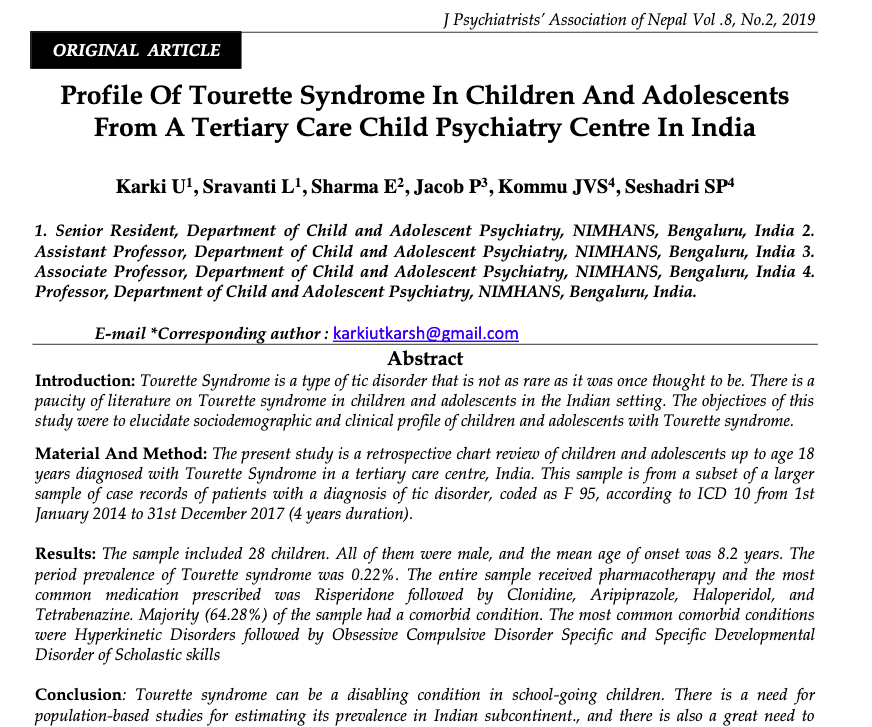
Introduction: Tourette Syndrome is a type of tic disorder that is not as rare as it was once thought to be. There is a paucity of literature on Tourette syndrome in children and adolescents in the Indian setting. The objectives of this study were to elucidate the sociodemographic and clinical profile of children and adolescents with Tourette syndrome. Material And Method: The present study is a retrospective chart review of children and adolescents up to the age of 18 years diagnosed with Tourette Syndrome in a tertiary care center, in India. This sample is from a subset of a larger sample of case records of patients with a diagnosis of tic disorder, coded as F 95, according to ICD 10 from 1st January 2014 to 31st December 2017 (4 years duration). Results: The sample included 28 children. All of them were male, and the mean age of onset was 8.2 years. The period prevalence of Tourette syndrome was 0.22%. The entire sample received pharmacotherapy and the most common medication prescribed was Risperidone followed by Clonidine, Aripiprazole, Haloperidol, and Tetrabenazine. The majority (64.28%) of the sample had a comorbid condition. The most common comorbid conditions were Hyperkinetic Disorders followed by Obsessive Compulsive Disorder Specific and Specific Developmental Disorder of Scholastic skills Conclusion: Tourette syndrome can be a disabling condition in school-going children. There is a need for population-based studies for estimating its prevalence in the Indian subcontinent., and there is also a great need to increase awareness and sensitize the public to seek help to improve the quality of life of children and adolescents with Tourette syndrome. Keywords: Adolescent Child, India, Tic, Tourette
Download